

Chocolate is one of the world’s most loved treats—whether it’s a daily indulgence or an occasional delight. But behind every bar is a simple yet fascinating ingredient: cocoa beans. Understanding where they come from helps you appreciate chocolate even more.
The World’s Leading Cocoa Regions
A large share of the world’s cocoa—over 70%—comes from West Africa, particularly Ghana and Côte d’Ivoire. Despite their size, these countries dominate global production thanks to their ideal growing conditions.
Cocoa thrives in regions close to the equator, typically within 20 degrees north and south. These areas offer the perfect mix of heat, humidity, and fertile soil. Across West Africa alone, millions of small-scale farmers cultivate cocoa, making it a vital part of the region’s economy.
Cocoa Beyond Africa
While West Africa leads the way, cocoa is also grown in parts of South and Central America. Countries like Brazil, Ecuador, Peru, and Mexico contribute significantly to global supply, especially in regions near the Amazon rainforest.
These areas share similar tropical climates, making them well-suited for cocoa farming. Still, most of the world’s cocoa continues to come from West Africa.
What Makes Cocoa “Ethical” and Sustainable?
Not all chocolate is created equal. Ethically sourced cocoa ensures that farmers are paid fairly and that production follows responsible labor practices—free from child or forced labor.
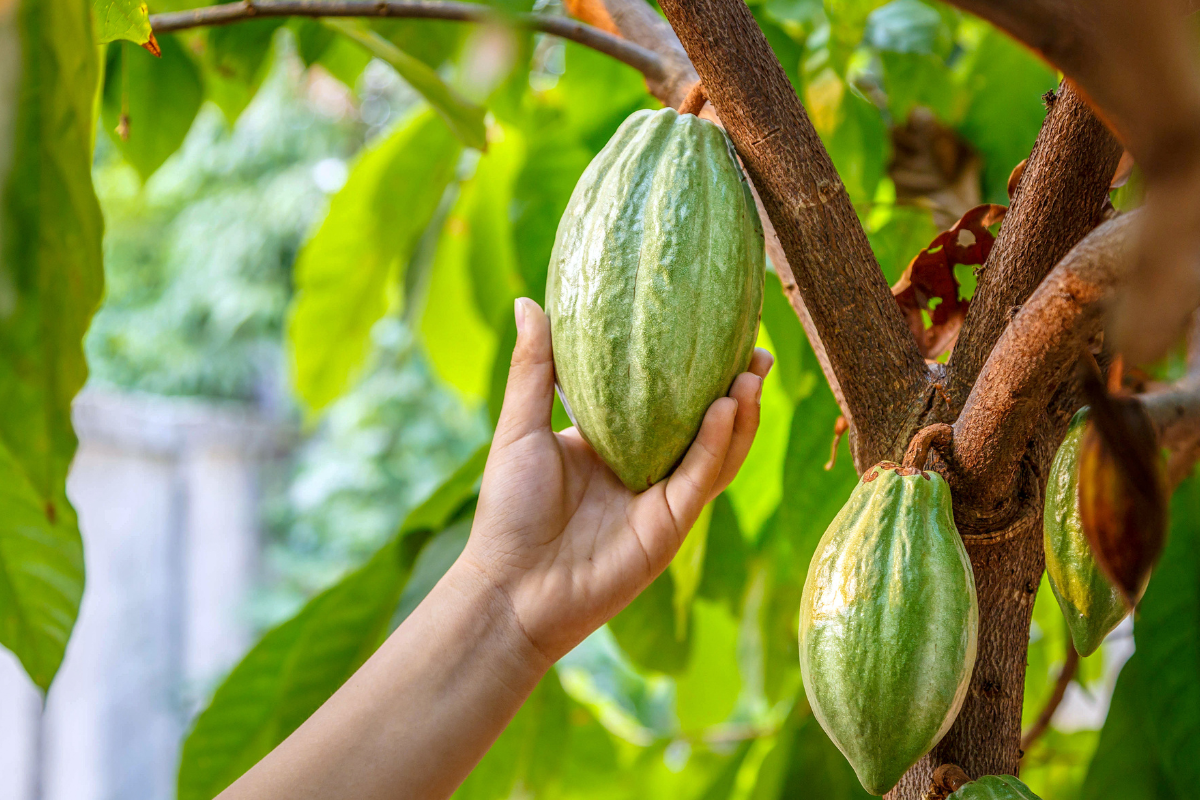
Growing cocoa is a long-term effort. The cacao tree (Theobroma cacao) takes about five years to produce its first pods. These trees grow in rich rainforest ecosystems that are home to diverse plant and animal life.
Sustainable farming plays a crucial role in protecting these environments. By preventing deforestation and preserving biodiversity, ethical cocoa production supports both nature and local communities.
How Your Choices Make a Difference
As a consumer, you have the power to support better practices. Choosing chocolate made from responsibly sourced cocoa helps ensure farmers receive fair wages and encourages environmentally friendly farming.
Look for certifications such as:
- Fairtrade
- Rainforest Alliance Certified™
- Participation in initiatives like the Cocoa & Forests Initiative
These labels indicate that the chocolate you’re buying meets ethical and sustainability standards.
Final Bite
Cocoa beans—the heart of chocolate—are grown in tropical regions around the world, with West Africa leading production. But beyond geography, the story of cocoa is also about people, sustainability, and responsible choices.
Next time you enjoy a piece of chocolate, you’ll know there’s a whole world behind its flavor—and your choices can help make that world a little better.