


Chocolate tempering is an important technique for anyone who wants to make professional-looking chocolates, truffles, bars, or decorations. Properly tempered chocolate has a smooth, glossy appearance, a firm snap, and a texture that melts pleasantly in the mouth. However, tempering can sometimes be frustrating, especially when chocolate develops streaks, becomes too thick, or refuses to set properly.
Understanding the most common chocolate tempering problems can help you troubleshoot them and achieve more consistent results.
What Is Chocolate Tempering?
Chocolate tempering is the controlled process of heating and cooling chocolate to encourage the formation of stable cocoa butter crystals. These crystals give chocolate its characteristic shine, snap, and smooth texture.
The process generally involves melting chocolate, cooling it to encourage crystal formation, and then gently bringing it back to a suitable working temperature. Different types of chocolate require different temperature ranges, so it is important to follow the recommendations for the particular chocolate you are using.
Problem 1: Chocolate Looks Dull
One of the most common tempering problems is chocolate that looks dull instead of glossy.
This usually indicates that the cocoa butter crystals have not formed correctly. Temperature fluctuations can also interfere with proper crystallisation.
How to Fix It
Try tempering the chocolate again using a reliable thermometer. Heat and cool it gradually rather than making sudden temperature changes. Stirring consistently can also help distribute the forming crystals throughout the chocolate.
Problem 2: White or Grey Streaks Appear
White or grey patches on chocolate are commonly associated with chocolate bloom. Fat bloom occurs when cocoa butter separates and recrystallises on the surface. Sugar bloom, on the other hand, can occur when moisture causes sugar to dissolve and then recrystallise.
How to Prevent It
Maintain stable temperatures throughout the tempering process and avoid exposing chocolate to moisture. Store finished chocolate in a cool, dry environment with relatively stable temperatures.
If bloom has already appeared, the chocolate can often be remelted and tempered again for applications where appearance matters.
Problem 3: Chocolate Does Not Set Properly
If tempered chocolate remains soft or takes an unusually long time to set, it may not have been properly crystallised.
How to Fix It
Check that you followed the correct temperature range for your type of chocolate. Dark, milk, and white chocolate contain different proportions of cocoa solids, cocoa butter, milk solids, and sugar, so their tempering requirements differ.
Avoid putting chocolate into a very cold environment simply to force it to set. Rapid cooling may produce undesirable results.
Problem 4: Chocolate Becomes Too Thick
Sometimes chocolate is correctly tempered but becomes thick and difficult to work with. This can happen as stable cocoa butter crystals continue forming while the chocolate is being used.
How to Fix It
Gently warm the chocolate while stirring. The goal is to bring it back toward its working temperature without overheating it and destroying the temper.
A thermometer is particularly useful here because even a small temperature change can affect the consistency.
Problem 5: Chocolate Develops a Grainy Texture
A grainy texture can result from overheating, moisture contamination, or improper handling. Even a small amount of water can cause chocolate to seize, turning it thick and grainy.
Useful Tip
Keep bowls, utensils, thermometers, and work surfaces completely dry. Steam from a double boiler can also cause problems if it comes into contact with the chocolate.
If water has entered the chocolate and it has seized, it may not be suitable for making glossy tempered chocolate, although it can sometimes be repurposed in sauces, cakes, brownies, or other recipes.
Problem 6: Chocolate Sets Too Quickly
Chocolate that begins setting before you have finished dipping or moulding can be difficult to handle.
This can happen when the working environment is too cold or when the chocolate temperature drops below its ideal working range.
Solution
Keep the chocolate gently warm while working and stir it regularly. If necessary, use a mild source of indirect heat to maintain the appropriate working temperature.
Avoid direct heat, which can create hot spots and damage the chocolate.
Problem 7: Chocolate Has Poor Snap
Properly tempered chocolate usually has a firm snap when broken. If it bends or feels soft, the temper may be incorrect.
Recheck your heating and cooling stages and make sure you are using an accurate thermometer. Scraping chocolate from the sides of the bowl back into the mixture can also help maintain consistency during tempering.
Use a Reliable Chocolate Thermometer
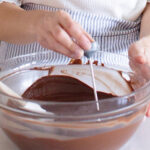
Temperature control is one of the most important aspects of successful tempering. A digital kitchen thermometer can make it much easier to monitor the chocolate accurately.
Measure the chocolate itself rather than relying only on the temperature of the bowl or surrounding water.
Choose Good-Quality Chocolate
The chocolate you choose can also influence your results. Couverture chocolate, which generally contains a higher proportion of cocoa butter, is commonly used for professional confectionery and is well suited to tempering.
Always check the manufacturer’s instructions because different chocolate formulations can have different recommended working temperatures.
Avoid Humidity and Moisture
Chocolate and water are difficult companions. Humidity, condensation, wet utensils, or steam can cause chocolate to seize or develop an undesirable surface.
Work in a dry environment whenever possible and make sure all equipment is completely dry before beginning.
Practice Makes Tempering Easier
Chocolate tempering requires attention to temperature, timing, movement, and environmental conditions. Even experienced chocolatiers can encounter problems occasionally.
Rather than discarding a batch immediately, identify what went wrong and consider whether the chocolate can be reheated and tempered again.
Conclusion
Successful chocolate tempering depends mainly on controlling temperature and preventing moisture contamination. Dull surfaces, streaks, poor snap, excessive thickness, and setting problems are all common issues that can usually be traced to temperature control, crystallisation, or handling.
Using a reliable thermometer, keeping equipment dry, working at the correct temperature, and stirring consistently can make the process much more predictable. With practice and patience, you can produce chocolate that is glossy, smooth, firm, and professional-looking.