

Chocolate is one of the world’s most popular foods, but its journey begins far away from the chocolate bars and desserts found in supermarkets. It starts with the cocoa bean, the seed of the cacao tree. Understanding where cocoa beans grow helps explain why certain regions have become famous for producing chocolate and why the flavor of chocolate can vary from one origin to another.
Where Does Cocoa Grow?
Cocoa beans grow primarily in tropical regions close to the Equator. The cacao tree, scientifically known as Theobroma cacao, requires warm temperatures, high humidity, regular rainfall and protection from strong sunlight.
The world’s main cocoa-growing regions are concentrated in West Africa, Central and South America, and parts of Southeast Asia and Oceania. Cocoa generally grows within about 20 degrees north and south of the Equator, where environmental conditions are suitable for the crop.
Unlike many major agricultural crops, cacao trees naturally prefer shaded environments. Young cacao plants are often grown beneath taller trees or within agroforestry systems that provide protection from intense sunlight and wind.
West Africa: The World’s Cocoa Powerhouse
West Africa is the most important cocoa-producing region in the world. Côte d’Ivoire and Ghana are particularly significant producers and together account for a substantial share of global cocoa production.
Cocoa farming provides an important source of income for millions of farming households in the region. Smallholder farmers play a major role in supplying cocoa to the international market.
The warm climate and seasonal rainfall in countries such as Côte d’Ivoire and Ghana create favorable conditions for cacao cultivation. Cocoa harvested in West Africa is used in chocolate products around the world.
Cocoa in Central and South America
Cacao has deep historical roots in Central and South America. The cacao tree originated in the upper Amazon region, and cacao has been cultivated and consumed by Indigenous peoples of the Americas for centuries.
Today, countries such as Ecuador, Brazil and Peru are important cocoa producers. Ecuador is particularly well known for its fine-flavor cacao, including varieties used by chocolate makers looking for distinctive aromas and flavors.
The diverse climates and landscapes of South America allow different cacao varieties to develop unique characteristics. Soil conditions, rainfall, farming methods and post-harvest processing can all influence the final flavor of chocolate.
Southeast Asia and Oceania
Cocoa is also grown in parts of Southeast Asia and Oceania. Indonesia is one of the major cocoa-producing countries in the region, while Papua New Guinea also has a cocoa-growing industry.
Cocoa production in these regions has developed differently from that of West Africa and Latin America. Farmers may grow cacao alongside other crops, and local environmental conditions can influence the characteristics of the beans.
What Conditions Does a Cacao Tree Need?
Cacao trees are relatively demanding plants. They grow best in warm, humid environments with plenty of rainfall distributed throughout the year.
Several factors are particularly important:
- Warm temperatures: Cacao is a tropical crop and does not tolerate cold conditions well.
- Regular rainfall: Adequate moisture is essential for healthy growth and pod development.
- Humidity: Tropical humidity helps create the environment cacao trees prefer.
- Shade: Young cacao trees benefit from protection against intense direct sunlight.
- Good soil: Well-drained, fertile soil supports healthy root development.
- Protection from strong winds: Cacao trees can be vulnerable to severe weather and wind damage.
These requirements explain why cocoa production is concentrated in relatively narrow tropical zones rather than being spread evenly around the world.
How Do Cocoa Beans Grow?
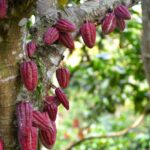
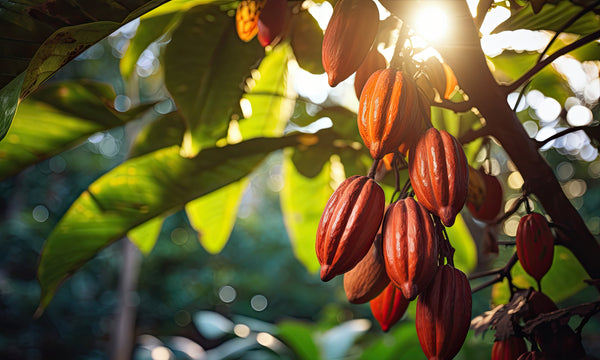
Cocoa beans develop inside large pods that grow directly from the trunk and larger branches of the cacao tree. This unusual characteristic is called cauliflory.
A cacao pod can contain dozens of cocoa seeds surrounded by a sweet, white pulp. When the pods mature, farmers harvest them by hand using appropriate cutting tools.
The beans are then removed from the pods and typically undergo fermentation and drying. These steps are extremely important because they help develop the flavor and aroma compounds that later become noticeable during roasting and chocolate production.
Why Cocoa Origin Matters for Chocolate Flavor
Cocoa beans from different regions can have different flavor characteristics. This is partly influenced by genetics, soil, climate, fermentation, drying and roasting.
For example, some cocoa may have fruity or floral notes, while other beans may produce deeper nutty, earthy or chocolate-forward flavors. Chocolate makers sometimes highlight the country or even the specific farm or region where the cocoa was grown.
This is why chocolate packaging may include terms such as single-origin, Ecuadorian cocoa or Ghanaian cocoa. The origin gives consumers information about where the cocoa used in the product was sourced.
Is Cocoa Grown Everywhere in the Tropics?
No. Although tropical conditions are necessary, they are not sufficient by themselves. Farmers also need suitable soil, rainfall patterns, access to agricultural knowledge, labor and infrastructure.
Climate change is another growing concern for cocoa-producing regions. Changes in temperature and rainfall patterns can affect crop productivity, pests, diseases and farming conditions. Sustainable agricultural practices and improved farming techniques are therefore becoming increasingly important.
From Cocoa Farm to Chocolate Bar
The journey from cocoa tree to chocolate involves several stages. After harvesting, farmers open the pods and remove the beans. The beans are fermented, dried and transported to processors or chocolate manufacturers.
At the processing stage, cocoa beans are cleaned and roasted before being cracked and winnowed to remove the shells. The resulting cocoa nibs can then be ground into cocoa mass. Chocolate manufacturers combine cocoa ingredients with other components such as sugar and, depending on the type of chocolate, milk ingredients and cocoa butter.
The mixture is refined and processed to create the smooth texture associated with finished chocolate.
Conclusion
Cocoa beans grow mainly in tropical regions around the Equator, with West Africa, Central and South America, and Southeast Asia being important production areas. Côte d’Ivoire, Ghana, Ecuador, Brazil, Peru and Indonesia are among the countries associated with significant cocoa production.
The environment in which cacao grows, along with the variety of the tree and the way farmers ferment and dry the beans, can influence the final character of chocolate. So the next time you enjoy a chocolate bar, remember that its story began with a tropical cacao tree, often thousands of kilometers away from the finished product.