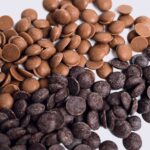



Chocolate is one of the world’s most popular treats, enjoyed in everything from chocolate bars and cakes to hot drinks and desserts. But before cocoa becomes the smooth chocolate we know and love, it begins as a seed inside a colourful tropical fruit.
These seeds are called cocoa beans, and they grow in a relatively narrow region around the Equator. Understanding where cocoa beans come from helps explain why chocolate production is closely connected to tropical climates, farming communities and global trade.
What Are Cocoa Beans?
Cocoa beans are the seeds found inside the pods of the cacao tree, scientifically known as Theobroma cacao. The tree produces large pods that grow directly from its trunk and branches.
Each pod contains a sweet, sticky pulp surrounding rows of cocoa seeds. Farmers harvest the ripe pods, remove the beans and pulp, and then ferment and dry the beans.
After drying, cocoa beans are transported for further processing. They may be roasted, cracked and ground to produce cocoa ingredients used to make chocolate.
So, the chocolate bar in a supermarket has a long journey that begins with a tropical cacao tree.
Where Does Cocoa Grow?
Cacao trees grow primarily in tropical regions close to the Equator. These areas generally provide the warm temperatures, humidity and rainfall required by the trees.
The major cocoa-growing regions include parts of:
- West Africa
- Central and South America
- Southeast Asia
- The Caribbean
- Oceania
Although cacao originated in the Americas, West Africa has become the world’s dominant cocoa-producing region.
West Africa: The World’s Cocoa Powerhouse
West Africa plays an enormous role in global cocoa production. Côte d’Ivoire and Ghana are particularly important producers, with millions of farming households involved directly or indirectly in the cocoa sector.
Other countries in the region, including Nigeria and Cameroon, also produce cocoa.
The climate in many parts of West Africa provides suitable conditions for cacao cultivation. Cocoa farming is often carried out by smallholder farmers, meaning production can depend heavily on family farms and local agricultural communities.
Cocoa in Central and South America
Cacao has deep historical roots in Central and South America. Ancient civilizations in Mesoamerica used cacao long before modern chocolate became popular around the world.
Countries such as Ecuador, Brazil, Peru and Colombia are important cocoa producers today.
Ecuador, in particular, is well known for producing fine-flavor cocoa varieties. South American cocoa is used by chocolate makers around the world and can contribute distinctive flavour characteristics to finished chocolate.
Cocoa Production in Southeast Asia
Cocoa is also grown in parts of Southeast Asia, particularly Indonesia.
Indonesia has developed a significant cocoa industry, with cultivation spread across several regions. The country’s tropical climate supports cacao cultivation, although farmers may face challenges involving pests, diseases, weather conditions and changing agricultural economics.
Malaysia has also historically been involved in cocoa production, although its cocoa industry is smaller than it once was.
Why Does Cocoa Need a Tropical Climate?
Cacao trees are naturally suited to warm, humid environments. They generally grow best in areas with relatively stable temperatures and sufficient rainfall.
The trees also benefit from protection from harsh sunlight. In traditional farming systems, cacao may be grown under the shade of taller trees.
This is one reason cacao cultivation is strongly concentrated within tropical areas rather than being spread evenly across the globe.
How Do Cocoa Beans Become Chocolate?
Growing cocoa beans is only the beginning of chocolate production.
After harvesting, farmers typically open the pods and remove the cocoa beans along with their surrounding pulp. The beans are fermented for several days, an important stage that helps develop the flavour compounds associated with cocoa.
They are then dried, often in the sun. Once sufficiently dried, the beans are transported to processors or chocolate manufacturers.
The beans are roasted and cracked to remove their shells. The remaining cocoa pieces, called nibs, can be ground into cocoa mass or cocoa liquor.
Depending on the type of chocolate being produced, cocoa ingredients are combined with ingredients such as sugar and milk. The mixture is then processed to develop the desired texture and flavour.
Why Is Cocoa Farming Important?
Cocoa is more than an ingredient. It is an important source of income for farming communities in producing countries.
Millions of farmers and workers participate in the cocoa supply chain, from cultivation and harvesting to processing and transportation.
However, cocoa farming can face serious challenges, including fluctuating prices, plant diseases, climate change, deforestation and labour concerns. These issues have increased interest in sustainable cocoa production and more transparent supply chains.
How Climate Change Could Affect Cocoa
Cocoa production depends heavily on suitable weather conditions. Changes in temperature and rainfall can affect flowering, pod development and crop yields.
Extreme weather, drought and changing pest patterns can make cocoa farming more difficult.
For this reason, researchers and agricultural organisations are exploring improved farming techniques, disease-resistant varieties, better shade management and other methods that could help farmers adapt to changing conditions.
Why Cocoa’s Origin Matters to Chocolate Lovers
Where cocoa is grown can influence the flavour of chocolate. Different growing regions can produce beans with different characteristics, depending on genetics, soil, climate, fermentation and drying practices.
Chocolate makers sometimes highlight the origin of their cocoa in the same way coffee producers identify growing regions.
This has helped create greater interest in single-origin chocolate and the stories behind the ingredients.
Final Thoughts
Cocoa beans grow primarily in tropical regions around the Equator, with West Africa, Central and South America, and parts of Southeast Asia being major production areas.
The journey from cacao pod to chocolate bar involves careful farming, fermentation, drying, roasting and processing. Understanding that journey makes it easier to appreciate the work behind one of the world’s favourite foods.
The next time you enjoy a piece of chocolate, remember that it began not in a factory or supermarket, but as a seed inside a cacao pod growing in a warm tropical environment.